

Fundamentals guide
The Ultimate Beginner Guide
A first-match foundation for Marvel Rivals: learn what each hero brings, play the objective through winning fights, and develop a small flexible hero pool.
Your job. Build reliable fundamentals before chasing advanced mechanics: manage cooldowns, understand your role, fight with your team, and reset when the fight is lost.
Start here if you are new to Marvel Rivals or hero shooters and want a practical overview before choosing a main or entering competitive play.
Source: Coach Mills - Marvel Rivals Ultimate Beginner's Guide (opens YouTube in a new tab)
The examples follow the source review. Hero kits and balance may differ from the current game; use the decision process and check current ability values in-game.
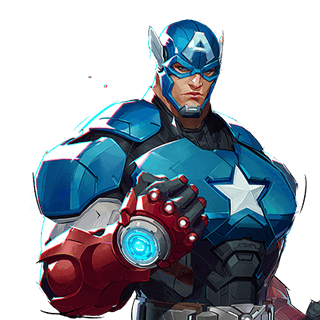
A hero shooter is more than aim
Start by learning a hero's rhythm: primary fire, abilities and the situations each tool solves. Aim matters, but positioning, timing and teamwork determine whether that aim has a useful opportunity. Passives shape the hero automatically; active abilities give you decisions to improve through practice.
Before spending a cooldown, name the swing it can create: an opening through damage, an ally saved by healing or protection, or a route changed by utility. An ability being ready is not itself a reason to use it. Apply the same test to ultimates, which build through contribution and time: give them a clear fight-winning purpose rather than holding them forever or spending them alone.
Understand the three role jobs
The three roles describe different ways to make a team fight workable. Vanguards survive pressure and claim ground so teammates can use safer angles. Duelists turn openings into pressure and eliminations, threatening isolated enemies or the backline. Strategists keep teammates alive while contributing utility, damage and high-impact decisions; healing is essential, but it is not their whole job.
Think of that durable front, finishing pressure and support as connected responsibilities rather than three separate games. Your role gives you a starting job, not a script. Read the current fight and help solve the problem that is preventing your team from moving forward.
Learn heroes, synergies, and matchups
Learn matchups by looking at tools, not only hero names. Ask which ability lets an enemy pressure you, escape, deny a play or punish a mistake. Briefly trying an unfamiliar hero teaches you what their cooldowns look like from the other side, even when you have no intention of mastering the entire roster.
Team-ups can add benefits, but a hero does not need a synergy to contribute. Composition still matters: adjust to the map, teammates and actual threats instead of forcing a rigid formula. When one enemy repeatedly causes trouble, identify the tool enabling them, then consider a different hero, angle or coordinated response that limits it.
Choose a main without trapping yourself
Try heroes that interest you before deciding what fits. Enjoyment and understanding produce more useful practice than choosing a supposedly optimal hero you do not know. Build comfort on roughly three or four heroes with different answers to common problems, rather than spreading your practice across the whole roster.
That small pool should leave room for bans, awkward matchups and team needs as competition becomes more demanding. A tier list can describe a different experience from yours: top-level strength may not transfer to your platform, experience or current skill. Choose a main you can learn consistently without making yourself unable to adapt.
Play modes through their important moments
Each mode has moments worth committing resources to. In Convoy, a checkpoint changes later spawns, so force defenders away and turn the fight win into payload movement. In Domination, winning a full team fight usually creates safer capture time than giving up a winnable fight for a few isolated seconds on the point.
Map knowledge makes those conversions easier. Learn where health packs, alternative routes, high ground and destructible cover let you recover or change an angle. Before the next fight, ask where you could retreat, rotate or pressure from a better position. The environment is useful when it lets your team contribute without becoming an easy target.
Win fights before chasing progress
A team fight is the committed clash in which both sides spend abilities and ultimates. Winning that clash generally buys more objective progress than arriving alone, one player after another. Stay close enough to help teammates address the same problem; six disconnected duels rarely create coordinated pressure.
Once a fight is clearly lost, disengage and regroup rather than feed staggered eliminations. After a win, take the secure progress available: capture or push, claim a better position, and prepare for the enemy's return. Keep tracking cooldowns and ultimates across the fight, because shared resources become useful opportunities only when the team can act on them.
Improve one repeatable habit at a time
Use early matches to learn instead of treating every result as a verdict on your ability. Choose one repeatable focus, such as keeping an escape ready, learning health-pack routes or grouping before entry. Quick Play offers room to test heroes and limits; Competitive asks for more awareness, flexibility and resource discipline.
When a death frustrates you, identify the information, position, cooldown or timing decision that could have made it safer. Small improvements repeated over matches are enough to make you a reliable teammate before you master every mechanic. Keep curiosity and enjoyment in the process: they sustain practice better than forcing a hero or style you dislike.
Hypothetical practice: regroup before the next payload fight
Imagine your team has lost a player and the remaining teammates are arriving from spawn at different times. Entering alone to touch the payload may feel like playing the objective, but another isolated death delays the team fight that could actually move it.
Use a safe retreat and health-pack route, group with teammates, and enter the next fight with your important abilities available. After a win, convert it into payload progress and a position for the enemy's return. This is a practice scenario for the guide's regroup-and-convert principle, not a promise that retreat is possible before every objective deadline.
Try this next match
For one match, make grouping before the committed fight your only focus. On each death, check whether teammates could support the entry and whether your important cooldowns were available; after a won fight, deliberately convert it into objective progress or a stronger position.
Sources and further reading
This lesson is written in our own words from Coach Mills - Marvel Rivals Ultimate Beginner's Guide (opens YouTube in a new tab).