

Vanguard guide
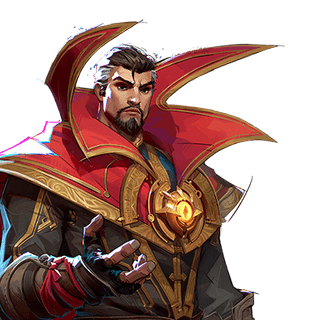
Doctor Strange
Doctor Strange creates room for his team by making the enemy work for every step. This lesson follows Infinitea's gameplay review to connect positioning, frontline handoffs and backline protection with the objective decisions they serve.
Your job. Hold ground your teammates can use while keeping cover, healing sightlines and defensive resources available for the next exchange.
Read this when you survive on the frontline but struggle to judge when to advance, protect a teammate or give ground. The goal is a repeatable decision process, not copying every aggressive play in the review.
The examples follow the source review. Hero kits and balance may differ from the current game; use the decision process and check current ability values in-game.
Position where help can reach you
Start with the relationship between three positions: yours, your supports' and the enemy's. Your Strategists need a clear line to heal you, while the enemy should have as few clean angles into you as possible. In the discussion beginning at 0:20, Infinitea treats those sightlines as the foundation of tank positioning. A spot that blocks friendly healing while exposing you to several enemies asks your team to solve a problem you created.
Cover reduces that demand before a shield or a heal is spent. Use a wall when you can; when you cannot, check whether the payload protects the direction that matters. Stand in front of teammates when your shield is meant to cover them. If you take a separate angle instead, avoid lining everyone up behind you so a missed shot into the tank still finds the backline.
The consequence reaches beyond your own health bar. As the review explains on attack at 12:15, constant unnecessary damage keeps your supports busy healing you. That leaves less attention for a threatened teammate, less damage into the enemy and fewer opportunities to use utility aggressively. Taking space efficiently means asking for only the healing needed to hold it.
Give ground before you run out of choices
A first allied death changes the fight even when your own health looks comfortable. At 1:09, Strange backs away instead of treating his current position as something he must defend at any cost. The retreat preserves room for the team to recover and makes the attackers choose between chasing and keeping players on the payload. Watch what they actually commit rather than assuming every retreat gives away the same amount of progress.
Space has a limit. If there is still room to recover together, spending some of it is often better than losing another player. Once leaving would immediately surrender the objective, a difficult contest may be necessary. After a lost fight, make the escape decision promptly: leave with teammates when survival is realistic, and avoid a late isolated death that postpones the next full regroup.
Hand off the frontline, then take a short angle
Think of the frontline as a responsibility you can share rather than a place one tank owns for the whole fight. Around 3:06, Magneto has spent protection while Strange has recovered health and some shield. Strange can step in front and absorb attention while Magneto backs away. The useful information is not simply that your own abilities are ready; it is that your teammate has a reason to stop taking pressure.
That same resource check determines whether an angle is available. In the sequence discussed at 9:28, Strange has damage prepared, defensive tools available and Magneto holding the point. A brief move toward the backline can create value without leaving the objective unattended. Check the side routes, make the enemy respect them and return before a short pressure play becomes an unsupported chase.
The attack-side flank discussed at 12:59 is a warning about that limit. Infinitea knows his supports are across the fight and accepts responsibility if the attempt fails. Its success does not make that position a default. Close-range pressure from The Thing or Thor also changes what Strange can safely contest. Reassess the route, range and exit instead of assuming the same duel will remain favorable.
Turn back without surrendering the objective
Peeling means turning to protect a teammate under attack. When Venom reaches your backline, the immediate question is whether you can help and still meet the objective deadline. The review's situations at 2:29 and 5:20 show why this is a trade rather than an automatic instruction to push or retreat. If you are the only tank keeping the point contested, leaving may lose it before you can return.
Being unable to chase the diver does not make protection impossible. In the sequence at 7:31, blocking the enemy team's follow-up fire limits the damage that can arrive alongside Venom. A shield can also protect teammates from a hook instead of merely saving its owner. Check the angles into the backline as well as the enemy directly in front of you.
Keep making that check during friendly support ultimates. They create room to act, but they do not remove every threat behind you. Around 10:55, Strange protects a teammate from Winter Soldier and denies the follow-up. The lesson is to spend the temporary safety on the problem that matters now, even when that means turning away from an aggressive plan.
Plan the response to your ultimate
Eye of Agamotto is a plan for the next exchange, not just a button to press when charged. In the discussions at 3:58 and 7:52, Infinitea looks at which support still has a defensive ultimate and what would happen after Strange commits. Prepare the approach from cover, identify the answer you want to force and give your team a chance to follow the same play.
Forcing that defensive answer can already be useful. If the team can give ground, stepping away may preserve the advantage for the next attempt. Spending another ultimate to continue through the enemy response is a separate decision, especially when the objective no longer leaves room to retreat. Tell teammates what you intend and ask what defensive abilities they have already drawn out; an opening is easier to use when everyone knows it exists.
The review also shows damage after Strange's ultimate helping build the next one. That makes safe follow-up valuable, but it is not a promise of a fixed amount of charge or permission to chase into a lost fight. Keep the same cover, healing and resource checks after the ultimate that made the approach possible before it.
Regroup before the next contest
A stagger is a series of isolated deaths that stops a team from fighting together. The checkpoint discussions at 6:53 and 16:45 show how easily it begins: one player has just respawned, another walks forward and the rest arrive too late to support either. Call for the team to wait before the next entry instead of discovering the problem after another death.
When the enemy supports die late, the same timing works in your favor. Use the temporary advantage together rather than turning it into several separate chases. Strange's portal can help a regrouped team reach a real contest, but it cannot recover a fight that is already over. Judge the remaining time and who is alive before committing the setup.
Use a portal to change who can contest
Once your team has an advantage, the next useful action may be to deny an entrance rather than deal more damage. The final sequence beginning at 18:12 turns that idea into an objective play: Strange presses forward far enough to set a portal at the defenders' approach. The portal changes where they arrive, making it harder for them to reach the point together.
This depends on the doorway, destination, alternate routes and remaining contest time. Announce the plan so teammates can protect the setup and maintain the pressure that makes it possible. A portal placed without that ground or protection is a different play, even if the doorway looks similar. The example below explains the decision shown in the review rather than prescribing a portal location for every map.
The doorway portal converts an advantage into capture
At 18:12, Infinitea is looking for a way to stop the defenders reaching the objective after his team gains kills. He calls the portal plan, pushes the defenders back from the point and places it across their doorway. That order matters: the team first creates the room that lets Strange set up safely.
The review then checks the play from the defenders' perspective. Approaching players are redirected away from the point or arrive separately, so the remaining defenders cannot restore a coordinated contest. The payoff is objective progress, not a larger damage total. This does not prove the same doorway trick will work elsewhere; without team protection, a suitable exit or a tight contest deadline, the value may disappear.
Try this next match
For your next match, focus on one question before stepping forward: can my supports see me, and who will hold the objective if I leave? Say the answer before taking a new angle. After the match, review one death or failed contest and check whether the answer changed while you kept moving. Keep this as a decision habit; do not judge it only by whether a risky play happened to succeed.
Sources and further reading
This lesson is written in our own words from Infinitea - How To Play Like The Rank One Doctor Strange In Marvel Rivals (opens YouTube in a new tab).