

Fundamentals guide
Season 8.5 Discipline
Season 8.5 rewards fundamentals harder: positioning, timing, resource management, sightline respect, and patience matter more than forcing fights or blaming the newest strong hero.
Your job. Use discipline to survive poke pressure, avoid macro mistakes, and enter fights with health, cooldowns, and positioning intact.
Use this guide when poke comps feel impossible, Cyclops or long-range heroes punish every rotation, or your team loses fights before anyone even dies.
Source: The Real Reason You Are Losing in Season 8.5 video guide (opens YouTube in a new tab)
The examples follow the source review. Hero kits and balance may differ from the current game; use the decision process and check current ability values in-game.
Season 8.5 punishes macro mistakes
This lesson reflects the source's Season 8.5 discussion, not a current tier list. The author argues that arguing only about whether Cyclops or Black Cat is broken, S-tier or weak misses the broader importance of discipline in that patch.
The mistakes highlighted are often decisions about the fight rather than execution: an extra peek, an exposed rotation, a chase too far or a cooldown spent early. Positioning, timing, resources and engagement judgement can matter more than exceptional mechanics when a patch punishes those avoidable errors. The claim is about making fewer mistakes, not finding a hero that removes the need to learn them.
Cyclops punishes bad habits
The guide uses Cyclops to show what a threatening angle punishes. Its concern is not simply his damage, but the wide peek, open-sightline rotation and unnecessary time spent visible that let that damage reach you. Habits that previously escaped punishment can become costly in a different patch or matchup.
The author frames that pressure as a reason to respect position rather than proof that the hero is impossible. Players already breaking sightlines and limiting exposure have an answer to practise; players who keep offering the same angle may feel the matchup is exposing them everywhere. Keep this as the source's Season 8.5 example rather than a fresh balance judgement.
Position relative to danger
A position is useful relative to danger, not simply because of its map location. Ask whether you can break line of sight, retreat when opponents look at you, or move again without crossing the most dangerous angle.
Also consider what happens if several enemies turn toward you at once. A nominally good spot can become unplayable when it has no protected exit. The source uses Cyclops to make those questions harder to ignore, but the position should answer them regardless of which hero currently controls the lane.
Adjust to the enemy composition
Movement should change with the enemy composition. In the source's Cyclops example, locate his position, identify the angle he controls and check whether he can see the rotation you are about to make. Count how many opponents could actually shoot you when you step out.
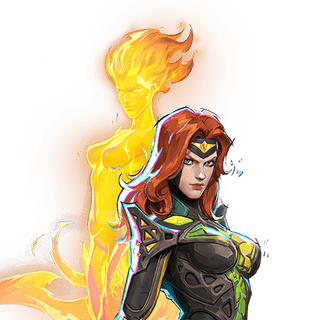
The same awareness applies when Phoenix or Hela owns a sightline. Adjust to the lobby instead of repeating your character's preferred route into whatever is watching it. Respect for an angle is information used to choose a better action, not a requirement to become afraid of every contest.
Poke comps win with pressure
The Season 8.5 review describes more poke-oriented pressure involving Phoenix, Hela, Cyclops and certain support compositions. Its distinction is between damage as a number and pressure as the way damage makes the next decision difficult.
A poke team need not eliminate someone immediately to create an advantage. Repeatedly dangerous angles and rotations can cost health, force supports to use cooldowns, exhaust tank resources and push the team into awkward positions. By the committed fight, those small mistakes may already have made the exchange feel lost.
Poke is happy winning slowly
The source contrasts a dive composition looking for an isolated target, missing cooldown or clean entry with a poke composition content to win more slowly. Poke can remain in neutral and wait for a support's early ability, a tank's resources spent before claiming ground or a Duelist's impatience.
A longer neutral phase gives those mistakes more chances to accumulate. That is why the lesson emphasizes patience: receiving pressure does not create an obligation to answer at once. Waiting can preserve the resources needed for a better window rather than let the enemy dictate the moment you commit.
Do not fight poke on its terms
Walking straight down main, absorbing avoidable damage, spending protection early and forcing a weak fight accepts a poke team's preferred exchange. Start by respecting sightlines instead of treating every visible angle as a challenge you must take immediately.
A different route, a pause or several seconds without an exposed action can be the useful response. Discipline may look uneventful before it pays off. The purpose of waiting is to stop supplying free mistakes and prepare a fight on terms your own composition can use.
Health is a resource
Health is part of the resource plan before the first elimination. Entering at half health because of repeated peeks makes the real fight harder. The guide describes how valuable supports become in a poke-heavy setting because their sustain keeps that preparation stable.
Its Season 8.5 examples are White Fox supporting off-angles and making poke heroes harder to isolate, and Luna adding ranged damage while keeping the team healthy. Those are era-specific observations, not updated recommendations. The wider role lesson is to combine sustain, useful pressure and movement; tanks also have to plan their approach rather than assume claiming space is simply walking forward.
Stop forcing every window
Not every available target, moment or fight is yours to force. The guide's disciplined player waits for a useful opportunity, then acts promptly when it arrives. Patient setup and decisive execution belong to the same process rather than opposing styles.
The source argues that Season 8.5 exposed existing problems with positioning, timing, resources and engagement instead of creating them. Metas and hero rankings change, but reducing those avoidable errors remains a way to improve beyond a particular patch. Carry the decision habits forward while keeping the source's balance examples in their original era.
Season 8.5 practice: a rotation watched by Cyclops
In the setting discussed by the source, imagine Cyclops watching the open route you normally use. Crossing it immediately and entering the next fight damaged gives the poke composition exactly the gradual resource advantage it wants.
Locate the dangerous angle and choose a covered route or wait until the pressure changes before exposing yourself. Preserve health for the committed fight, then act promptly on a real opening. This is a hypothetical use of the review's Season 8.5 example; it does not assert today's hero balance or guarantee that every map offers a safe alternative before the objective deadline.
Try this next match
For one match, check the enemy-controlled sightline before every rotation and preserve health for the committed fight. Review a damaged entry or early death for an avoidable extra peek, then choose the covered route or waiting decision you would try next time.
Sources and further reading
This lesson is written in our own words from The Real Reason You Are Losing in Season 8.5 video guide (opens YouTube in a new tab).